What Painting Animals Has Taught Me About Paying Attention
 Andrea Gianchiglia
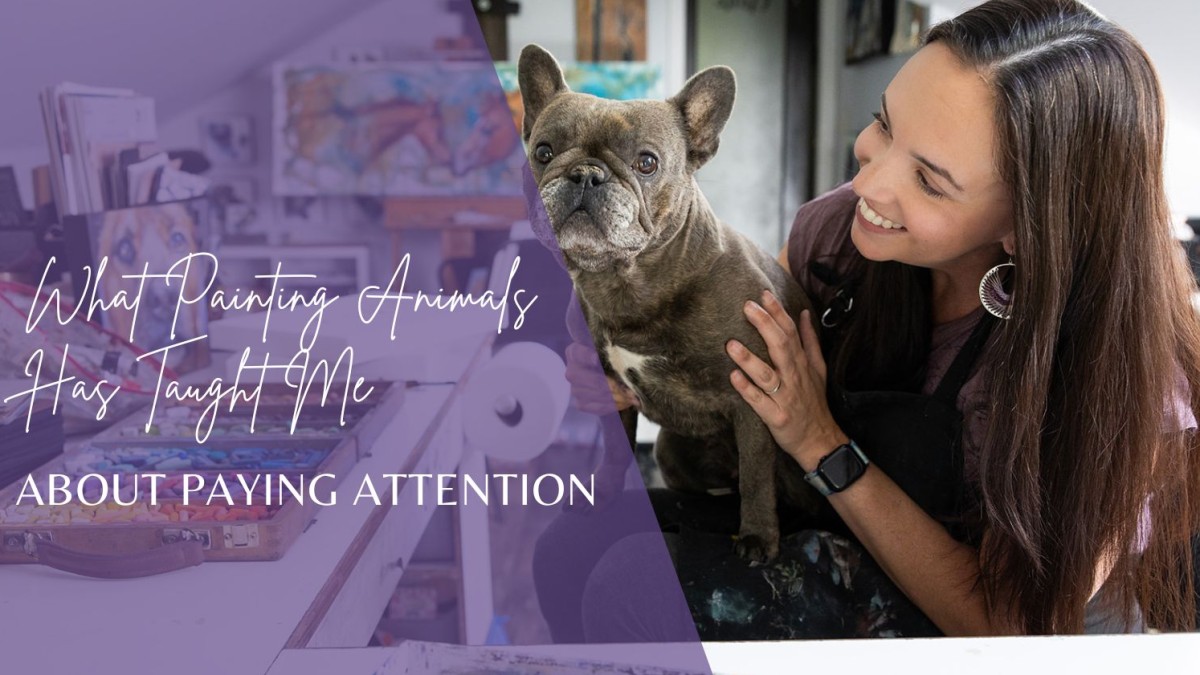
There's a moment that happens in almost every animal portrait I paint.
There's a moment that happens in almost every animal portrait I paint.
I'm looking at a reference photo, mixing colors, making marks, and then something shifts. I stop seeing "a dog" or "a horse" or "a cow." I start seeing this one. The way the light catches the wet edge of an eye. The particular tilt of a head that says everything about who this animal is. The texture of fur that's been rubbed soft by a thousand lazy afternoons in the sun.
That shift, that moment of really paying attention, is the whole thing. It's what makes a painting come alive. And it turns out, it's what makes a creative life come alive too.
Painting animals has been my greatest teacher. Not in technique, though I've learned plenty of that. But in the art of noticing. And I think it has something to teach you, too.
You Don't Have a Creativity Problem. You Have a Noticing Gap.
When women come to me saying they've lost their creative spark, the story is almost always the same. Life got full. The kids, the job, the endless logistics of holding everything together. Art became the thing that waited.
And then, when they finally sit down to make something, it feels flat. Forced. They can't find what they used to feel.
Here's what I've learned from years of painting animals: you don't make interesting art by trying to be interesting. You make interesting art by being interested. The spark doesn't come from willpower. It comes from attention.
Most of us are so busy moving through the world that we've stopped actually seeing it.
What Animals Demand From You
You cannot paint an animal without looking. Really looking.
A photo of a golden retriever is just a reference until you ask: Where does the fur catch the light and turn almost white? What color is the shadow inside the ear, is it purple, brown, warm grey? Are the eyes amber or gold or something in between?
Animals won't let you be lazy about this. They have too much specificity. Too much individuality. The moment you paint a "generic dog," you've lost. The portrait falls flat, and you know exactly why.
What animals teach you is that the universal is always hiding inside the particular. You don't paint Dog. You paint this dog. And somehow, in getting deeply specific about one, you say something that resonates with everyone who has ever loved any animal at all.
That principle has quietly reorganized how I move through my whole life.
Slow Looking as a Creative Practice
I call it slow looking. And it's the most underrated skill in any creative practice.
Slow looking is what happens when you stop rushing past the thing in front of you and give it real time. Not the five seconds your phone has trained you to give. Real time. The kind where you start to notice things you'd completely missed.
I practice this constantly. I'll sit with a reference photo for ten minutes before I ever pick up a pastel. I'll notice the expression. The posture. The story that seems to be happening just outside the frame. By the time I start painting, I feel like I know this animal. And that knowing shows up in the work.
You can bring this same practice into your creative life, whether you paint animals or not.
Slow looking sounds like: sitting with your sketchbook and drawing the same subject three times, differently each time. It sounds like spending twenty minutes with one painting at a museum instead of walking the whole gallery. It sounds like taking a photo walk where you commit to finding beauty in the ten-foot radius around your feet.
Slow looking retrains your eye. And a retrained eye is the single most valuable creative tool you can develop.
What Paying Attention Actually Does for Your Art
Here's the practical payoff, because this isn't just philosophy.
When you really pay attention, three things happen:
Your work gets more specific. Specificity is what makes art resonate. The details that feel almost too small to matter are the ones that make a viewer catch their breath. The crescent of light on a dark eye. The single crooked whisker. The way a horse holds its weight differently on each leg.
Your decision-making gets easier. When you understand your subject deeply, you stop second-guessing every mark. You know what you're after. The painting has direction.
You start to enjoy the process. This is the one nobody talks about enough. When you're paying attention, you're present. And presence feels good. The anxiety of "is this any good?" gets quieter when you're genuinely absorbed in what you're doing.
This is the thing I come back to again and again in my teaching. Technique matters. Color theory matters. Composition matters. But underneath all of it, attention is the foundation. Without it, all the skills in the world produce art that looks competent and feels empty.
For the Woman Who Has Lost Her Creative Eye
If you're returning to art after a long break, or if you've been making work that feels technically fine but creatively flat, this is where I'd start.
Not with new brushes. Not with a new class. Not with a bigger studio.
With noticing.
Go outside and find something alive, a plant, an animal, a cloud, and look at it for longer than feels comfortable. Notice what happens. Notice what you see at minute one versus minute five versus minute ten. Let it get interesting.
Then draw it, paint it, photograph it, write about it. Whatever your medium is. Bring what you noticed into the work.
Do that three times a week for a month. I promise you, something will shift.
Creative confidence isn't built from skill alone. It's built from the growing certainty that you can see things others miss, and that you can bring that seeing into your work. That confidence comes from practice. And the most important practice isn't making more art.
It's looking more carefully at life.
The Animals Knew All Along
My cows, my dogs, my horses, they haven't been quiet little subjects I've observed from a distance. They've been teaching me something. Every time I sit down to paint one, I have to show up fully. I have to set aside the noise and actually be present with what's in front of me.
That's the practice. In the studio, yes. But also in your life.
The artists I see grow the fastest aren't the ones who paint the most. They're the ones who start seeing everywhere. Who look at the light on a gas station puddle and think, "that's beautiful." Who study the expression on their dog's face like it's the most fascinating thing they've ever seen, because in that moment, it is.
You have access to that way of seeing. You were probably born with it. Life just got in the way.
Come back to it. The animals will be waiting.
Ready to rebuild your creative eye and your creative confidence? The Creative Journey Membership at createandinspire.art is where we do exactly this work, with community, structured stages, and an artist (me) who genuinely believes in what you're capable of. Come find your people.